
As Seen On:



Your 24/7 Post Office…
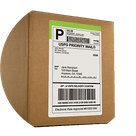
Send invoices, letters, packages
Print domestic and international USPS® postage.
No more guesswork
We’ll figure out the shipping rate and best mail class for you.

Eliminate trips to the Post Office
You can do anything at the Post Office right from your desk, 24/7.
Do more than a postage meter for less
Avoid hidden fees, equipment insurance, and having to buy or lease additional hardware. Learn More
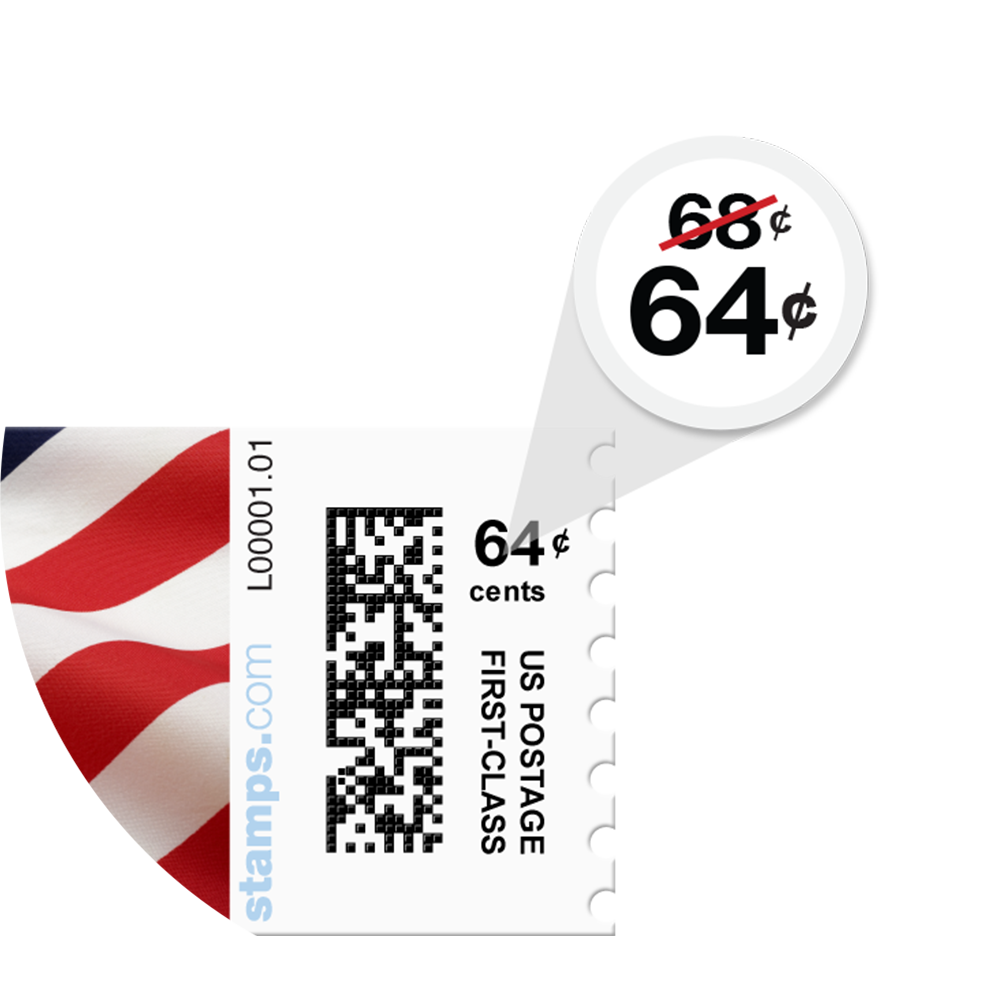
Never pay full price for stamps again
Get postage discounts you can’t get at the Post Office.

Customer Support
Call 888-434-0055, 6am-6pm PT, or email, chat, and find answers online any time.

Here’s how it works…

Open a Stamps.com account
Simply click the “Get Started” button to sign up for Stamps.com and get access to all the services of the Post Office right from your computer 24/7. Even get discounts you can’t get at the Post Office!

Try it out with $5 free postage
We’ll give you 4 weeks to see if Stamps.com is right for you. We’re so confident you’ll like Stamps.com, we’ll also throw in $5 free postage to use during those 4 weeks.

Don’t pay unless you stay
Cancel your account online or call 1‑855‑608‑2677 to cancel within the 4‑week trial period and pay no service fee. The monthly fee is just $19.99 plus applicable taxes, if any, including the first month. Your service will continue uninterrupted as long as you do not cancel.
Not just for small office mailing

MULTI-LOCATION SOLUTIONS
Efficiently manage your mailing across various locations—cut costs and enhance visibility with our tailored solution.

SHIPPING SOLUTIONS
Process orders, print discounted shipping labels, track shipments, keep customers updated, and scale your online store.
Frequently Asked Questions
We offer new customers a 30-day no-risk trial. That’s 30 days to take Stamps.com for a spin to understand its features and see if it’s right for you.
If for any reason you decide that Stamps.com is not right for you, you can cancel your free trial anytime before the trial period ends and you won’t be charged. If you stay with Stamps.com past the trial period, you will be charged your monthly subscription fee for your chosen plan, including the fee for the first month of use.
We have subscription plans to meet everyone’s needs. Visit our pricing page to view our plans, prices, and included features.
No. All you need is your computer, a printer, and Stamps.com. You can print labels on plain paper, print postage directly onto any type of envelope, or on our NetStamps®, which are like sticker sheets you can print postage on.
Should you want to take your mailing and shipping to the next level, the Stamps.com Store has all the supplies you need: NetStamps® sheets and rolls for postage, digital scales so you never over (or under) pay for the postage you need, thermal printers for sticky shipping labels, and packing supplies of all kinds.
While Stamps.com is best known for printing USPS postage on stamps and envelopes to send any class of mail or shipment, you can also create shipping labels with services from the following carriers:
- USPS (see all services)
- UPS (see all services)
- DHL Express (see all services)
- GlobalPost (see all services)
With more carriers planned for the future!
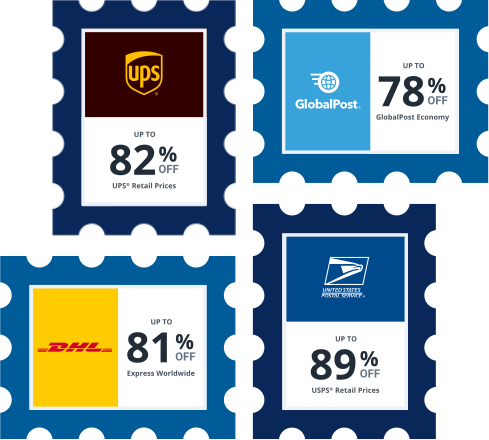
With USPS, Stamps.com customers have access to Commercial and Cubic Pricing, as well as Negotiated Service Agreements. Savings include:
- Up to 89% off USPS rates
- Up to 82% off UPS rates
- Up to 78% off GlobalPost rates
- Up to 81% off DHL rates
- Up to 40% on package insurance
Yes! When you choose the E-commerce subscription plan, Stamps.com can automatically import orders directly from supported shopping carts and marketplaces including eBay, Shopify, Amazon.com, Etsy and others (see full list). You can also import orders from a CSV file, Microsoft Excel, XML, or your own ODBC.
Yes! Our online help center is available 24/7 and provides how-to guides to use our product, information to troubleshoot common issues, and detailed information about shipping with our supported carriers.
We also have a dedicated team of knowledgeable agents available to talk through any issues or questions. You can contact our customer care team at 1‑855‑889‑7867 Monday-Friday from 6am-6pm Pacific Time.